How Clogged Gutters Cause Ice Dams in Green Bay Winters (and How to Prevent Them)
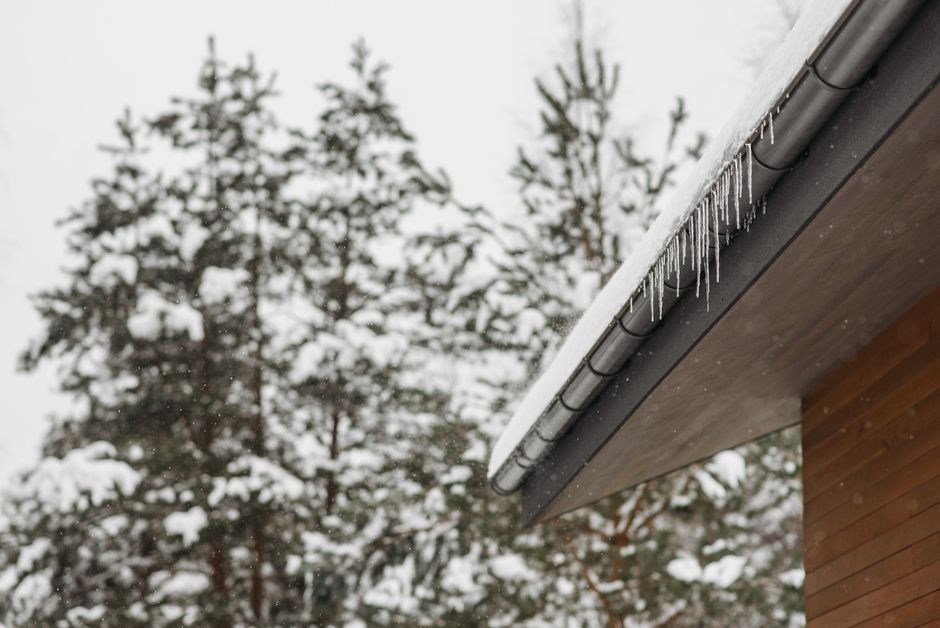
Ice dams are one of the more misunderstood winter problems a Green Bay-area home can face — misunderstood because the visible symptom (a ridge of ice at the roof edge) has a cause that starts inside the attic, not outside on the roof. Here's how ice dams actually form, where clogged gutters fit into that process, and what actually helps prevent them.
How Ice Dams Actually Form
An ice dam starts with heat. Warm air escaping from inside the attic warms the underside of the roof deck, just enough to melt the snow sitting on the upper, warmer portion of the roof. That meltwater runs down the roof surface until it reaches the eave — the overhang at the roof's edge, which sits outside the heated part of the house and stays colder. At that colder edge, the meltwater refreezes.
Refreezing at the same spot, storm after storm, builds up an ice ridge along the eave. Once that ridge exists, it acts as a dam: more meltwater arriving from above the ridge can't drain past it and instead pools right behind it, on the roof surface, under the snow. Given enough time and enough pooled water, that trapped water works backward under the shingles, since shingles are designed to shed water running downhill, not to hold back standing water sitting still.
Where Clogged Gutters Fit In
A clogged gutter doesn't cause the heat-loss mechanism described above — that part happens regardless of gutter condition. What a clogged gutter does is make the resulting ice dam significantly worse. Gutters sit right at the eave, exactly where the ice ridge is forming in the first place. When a gutter is blocked with leaves and debris, meltwater reaching that spot has nowhere to go — it can't drain through the downspout the way it's supposed to, so it pools right where the ice ridge is already building. That additional standing water freezes along with everything else, adding to the ridge's size and giving backed-up meltwater even more volume to work under the shingles with.
A clean, properly draining gutter doesn't prevent the heat-loss side of ice dam formation, but it does prevent this specific compounding effect — one less source of standing water sitting exactly where ice is already prone to build up.
Where Ice Dams Typically Form on a Green Bay Roof
Ice dams most commonly show up along lower roof edges and eaves, and especially above rooms that have less attic insulation below them — a bonus room over a garage, an addition with a shallower attic space, or any section of roof where the insulation layer is thinner than the rest of the house. Less insulation in a specific spot means more heat escaping into that section of attic, which means more localized melting directly above it, which means a more concentrated ice buildup at the eave below.
The Timing That Actually Prevents This
The cleaning that matters most for ice dam prevention is a late-fall cleaning — done after the leaves are down but before the first hard freeze sets in. Cleaning earlier in the fall risks missing debris that comes down later in the season; cleaning too late means the gutter may already be dealing with early freeze conditions before it's been cleared. That late-fall window is when clearing the channel does the most good heading into the season where compounding matters most.
Gutters Are Part of the Fix, Not the Whole Fix
It's worth being direct about this: keeping gutters clean addresses the compounding factor at the eave, but it does not address the root cause of most ice dams, which is heat loss through the attic. Attic insulation and ventilation are the other half of real prevention — insulation slows how much heat reaches the roof deck in the first place, and ventilation helps keep the underside of the roof closer to outdoor temperature so less melting happens up top to begin with.
A property that keeps its gutters spotless every year but has poor attic insulation can still develop significant ice dams. Conversely, a well-insulated and ventilated attic dramatically reduces how much melting happens in the first place, which reduces how much the gutter condition matters at all. The two work together rather than one substituting for the other.
Gutter Guards and Ice Dams
Guards add another layer to this picture, since they change how debris — and in some conditions, snow and ice — behave at the eave. That's a large enough topic to cover on its own; see gutter guards and ice dams in Wisconsin for how guard type factors into ice dam conditions specifically.
The Bottom Line
Ice dams form from heat escaping through the roof deck and refreezing at the colder eave — a mechanism that starts in the attic, not the gutter. A clogged gutter doesn't start that process, but it makes the resulting ice buildup meaningfully worse by trapping meltwater exactly where the ice ridge is already forming. Late-fall cleaning, ahead of the first hard freeze, addresses that compounding factor; attic insulation and ventilation address the root cause. Both matter for a full prevention approach. A gutter inspection & damage assessment can help identify whether ice dam damage has already affected a roof edge or gutter system after a hard winter.