Where Does Clogged Gutter Water Actually Go? (Why It Damages Wisconsin Homes)
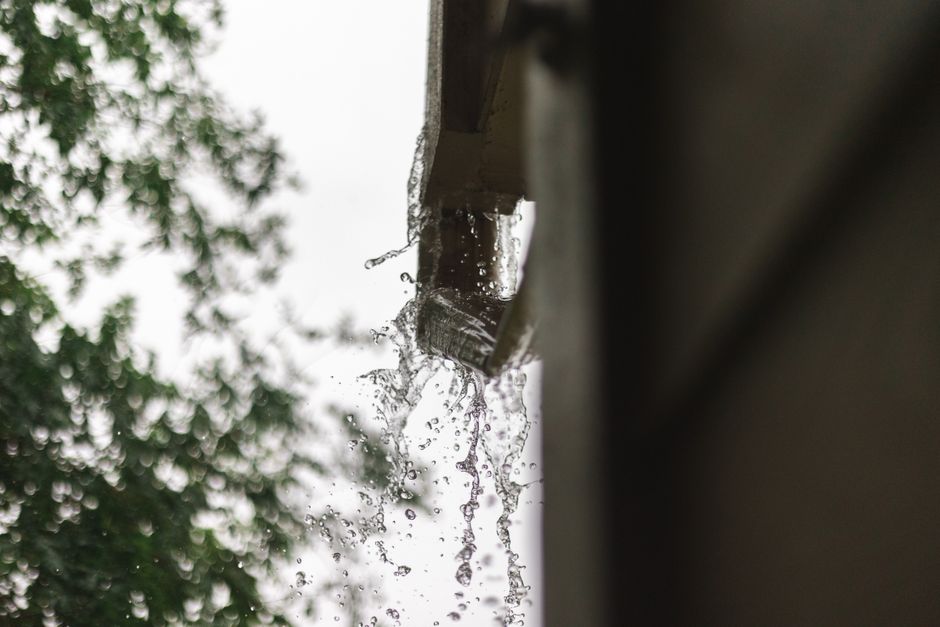
A gutter system has one job: capture the water running off a roof and move it, through the downspouts, to a point well away from the foundation. When that system is clogged, the water doesn't stop moving — it just moves somewhere else. Understanding where it actually ends up explains why a clogged gutter is more than a cosmetic problem.
The Job Gutters Are Supposed to Do
In a functioning system, roof runoff is channeled into the gutter, carried along the run to a downspout, and discharged at a point directed away from the house. Every part of that path matters — a gutter that catches water but has nowhere for it to go is only half a system.
Where Clogged Water Ends Up
When debris blocks the channel or a downspout, water backs up and finds the nearest way down, which is usually straight over the front edge of the gutter. From there, it typically ends up in one of a few places:
- Pooling at the base of the foundation. Water that overflows near the house lands right next to the foundation wall instead of being carried a safe distance away.
- Soaking into the soil against the foundation. Repeated pooling saturates the soil right where it contacts the house, rather than draining off to the side.
- Working into small existing cracks. Water finds its way into hairline cracks in a foundation wall or slab, which is a very different situation than water simply running past on the outside.
- Eroding landscaping beds near the house. Repeated overflow at the same point wears channels into mulch and soil and can undermine plantings positioned close to the foundation.
None of this requires a dramatic, obviously broken gutter. A partial clog that just changes where the water goes is enough to start these problems.
Why This Matters More in Wisconsin
Wisconsin's clay-heavy soil holds water near the surface longer than sandy soil would, which means water pooling at a foundation doesn't drain away quickly — it sits there, in contact with the foundation wall, for longer than it would in a different soil type. That extended contact time is exactly what makes small cracks worse.
Freeze-thaw cycles compound the problem. Water that has worked into a foundation crack expands when it freezes and contracts again when it thaws. Repeated over a winter, that cycle gradually widens whatever crack the water is sitting in — a process that only needs moisture and a freeze-thaw swing to keep going, both of which a Wisconsin winter supplies repeatedly.
Common Leak and Overflow Points to Watch
A few spots in a gutter system tend to fail before the rest:
- Inside corners, where debris naturally collects fastest as water changes direction
- Seams in sectional gutter systems, where two pieces join and a gap can develop over time
- Downspout connection points, where a loose or separated fitting lets water escape before it ever reaches the ground discharge point
Checking these specific points during a periodic look at the system tends to catch problems before they show up as foundation or landscaping damage.
Why Gutters Overflow Even When They Look Mostly Empty
It's easy to assume a gutter that looks reasonably clear from the ground isn't the source of a water problem, but overflow doesn't require a fully packed channel. A bird's nest lodged at one point, compacted debris sitting low in a downspout opening, or a section that's lost its proper pitch can all cause water to back up and overflow well before the gutter looks obviously full. A quick glance from the ground isn't always enough to catch these issues — they tend to show up more clearly on close inspection.
Signs the Water Is Already Going Somewhere It Shouldn't
A few things around a home's exterior tend to show up before the damage becomes serious. Mulch or soil that's visibly displaced or channeled in a line leading away from a downspout is one of the more obvious ones — that's a path water has been repeatedly following. Efflorescence, a white, chalky residue on a foundation wall, often signals water has been moving through the concrete or block itself. A basement or crawlspace that smells consistently damp, or shows a faint waterline on a wall, can trace back to water pooling outside at the foundation rather than a problem originating inside. None of these signs point definitively to a gutter issue on their own, but they're worth connecting back to what's happening — or not happening — at the roofline above.
Landscaping and Grading Play a Role Too
Gutters and downspouts are only part of the water-management picture. Even a gutter system draining exactly as intended can still contribute to a damp foundation if the ground immediately around the house is flat or sloped toward it rather than away. Because of that, addressing an overflow or clog problem at the gutter is often only half of what actually stops water from reaching the foundation — the grading and discharge point at the base of each downspout matter just as much as whether the gutter itself is clear.
The Bottom Line
Clogged gutter water doesn't just vanish — it goes to the foundation, the soil around it, the cracks already present in it, and the landscaping nearby, and Wisconsin's soil and freeze-thaw conditions make that water do more damage, more quickly, than it would in a milder climate. Keeping the downspouts and connection points clear is as much a part of preventing this as keeping the gutter channel itself clean. Downspout cleaning & repair covers what that maintenance looks like and how connection points and clogs get addressed.